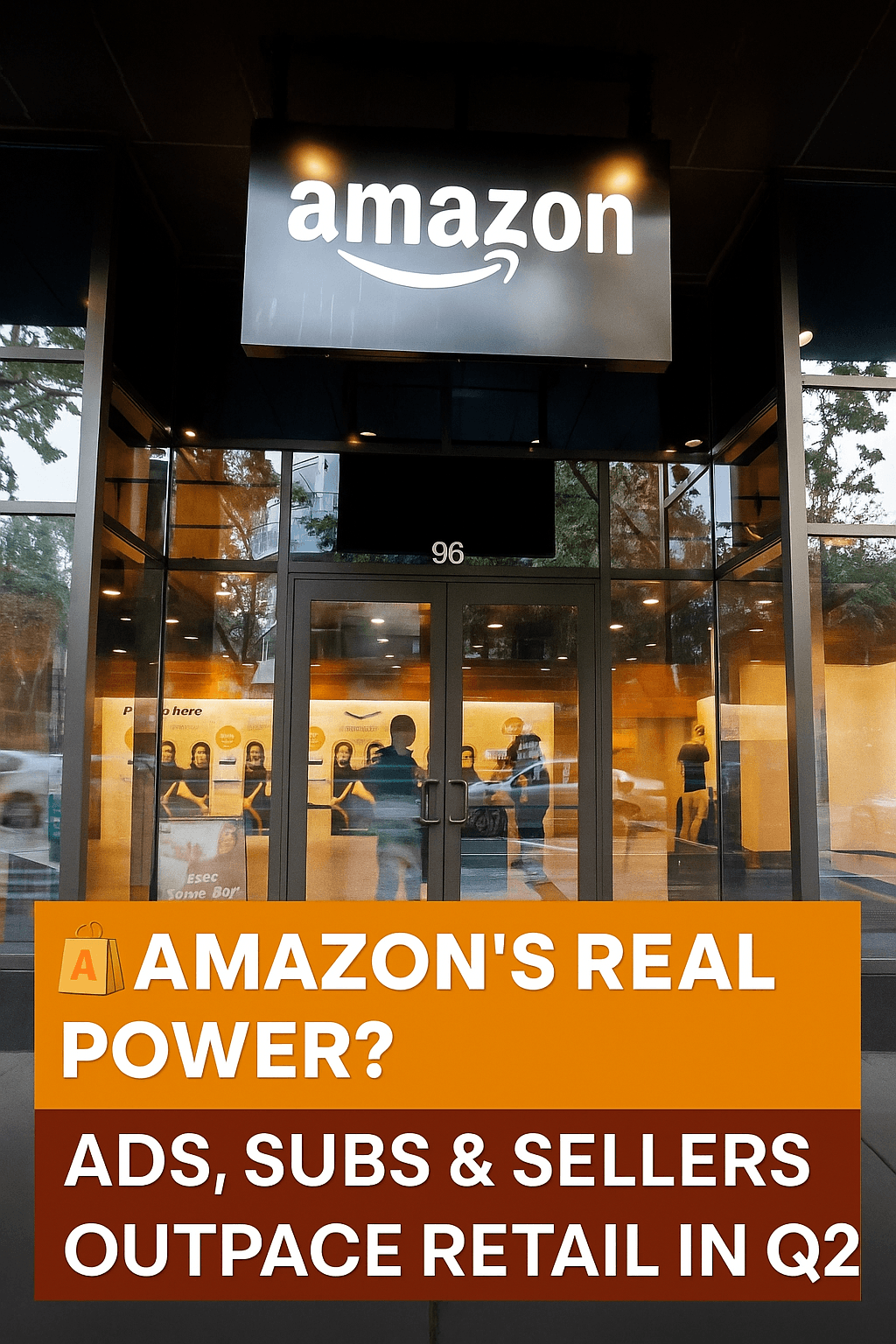
Amazon’s Real Power- Ads, Subs & Sellers Outpace Retail in Q2

Ad growth, subscriptions, and marketplace sellers are driving Amazon’s dominance, not just product sales.
Amazon’s Q2 earnings report revealed that while the e-commerce giant’s online store sales rose 11% to $61.5 billion, and its physical stores grew 7% to $5.6 billion, its non-retail operations surged even faster.
Third-party seller services brought in $40.3 billion (up 11%), advertising revenue jumped 23% to $15.7 billion, and subscription services climbed 12% to $12.2 billion. Together, these three business units brought in more revenue than Amazon’s total product sales.
This shift shows how Amazon is quietly becoming more than a digital storefront — it’s increasingly a marketplace powered by paid placement, seller fees, and subscriptions like Prime.
Why It Matters to Deal-Seeking Shoppers For consumers, this means:
More third-party deals: With sellers thriving, shoppers can find deeper discounts, niche products, and competitive pricing, especially from newer or overseas brands.
More targeted ads: Amazon’s massive ad growth means your search results are more curated, but potentially more pay-to-play. Use filters and reviews to spot authentic deals.
Stronger Prime value: As subscription revenue grows, expect Amazon to continue adding perks, like faster shipping to rural areas and exclusive access to high-end brands.
CEO Andy Jassy touted new brand additions like Nike, Marc Jacobs Fragrances, Aveda, Dolce & Gabbana, and Stella McCartney — a signal that Amazon wants to compete with premium and luxury online shopping destinations.
Tariff Uncertainty Looms Despite solid growth, Amazon isn’t immune to external threats. Jassy acknowledged concerns over new U.S. tariffs, saying there’s been “a lot of noise” but no major impact yet. However, looming policy shifts — such as the removal of the de minimis loophole — could curb cheap imports from platforms like Temu and Shein, handing Amazon a competitive edge in fast fashion and budget categories.
Amazon Haul’s Chance to Shine Analysts suggest that this disruption could benefit Amazon Haul — its response to the ultra-low pricing of Chinese-based competitors. If tariffs stick, Shein and Temu could lose ground, and Amazon’s visibility in that space may grow.
Next-Day Delivery for Rural Shoppers In June, Amazon announced an expansion of next-day and same-day delivery to over 4,000 rural towns and communities. That’s backed by a $4 billion investment through 2026 to extend its logistics network.
For shoppers outside major metros, this could mean faster access to deals and fewer shipping delays, especially on essentials and last-minute purchases.
“The gains in any one area might be modest,” said GlobalData’s Neil Saunders, “but given the sheer number of rural areas across America, the gains for Amazon are significant.”
Bottom Line for Shoppers As Amazon becomes less dependent on direct sales and more on powering a global seller ecosystem, shoppers should expect more variety, smarter targeting, and (hopefully) more competition-driven deals. But it also means staying vigilant — not every top result is the best bargain.
SHARE THIS ARTICLE



READ MORE