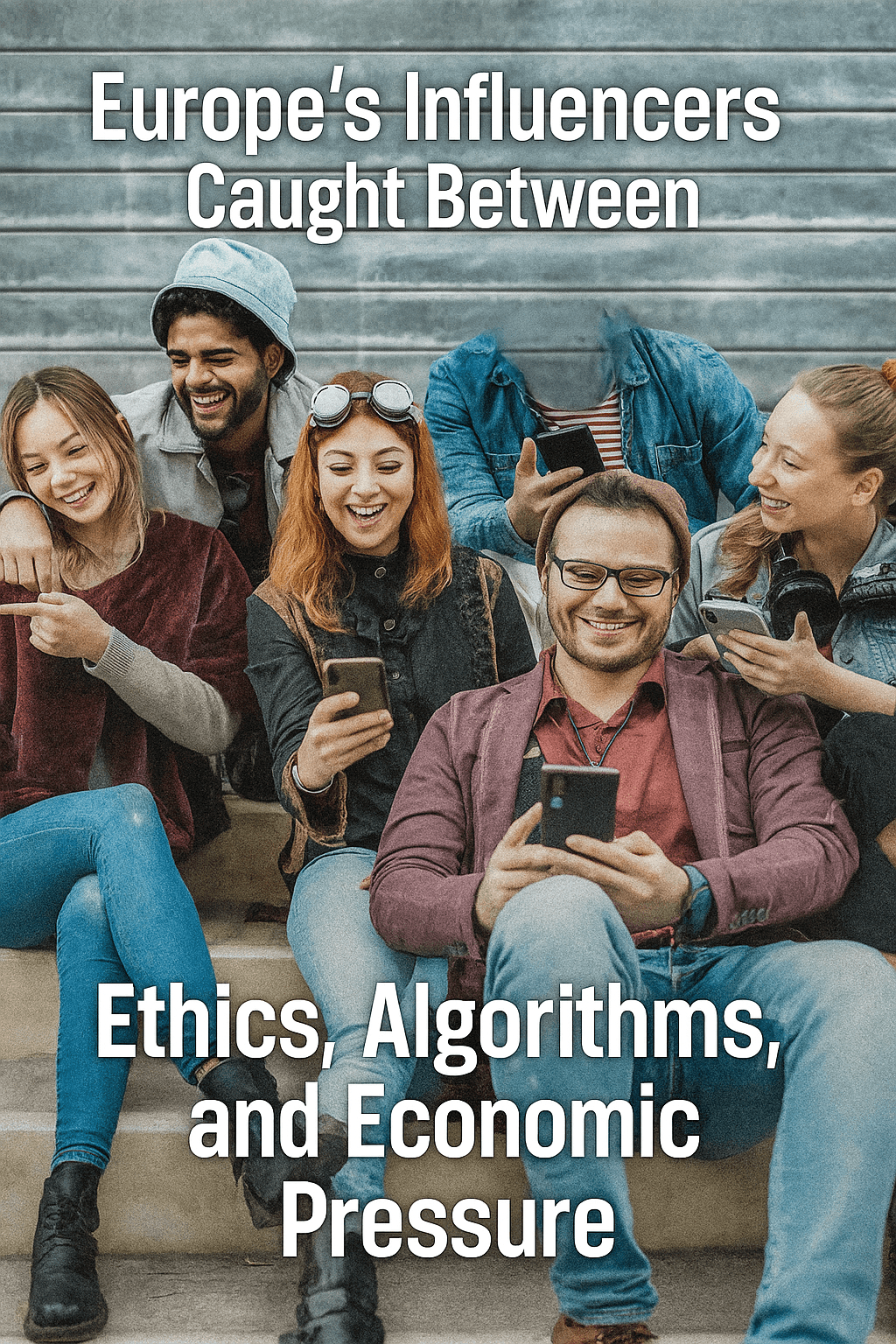
Europe's Influencers Caught Between Ethics, Algorithms, and Economic Pressure

New Kolsquare study reveals stress, income gaps, and rising brand demands among digital creators
A new study from influencer marketing platform Kolsquare reveals the difficult balancing act European content creators face as they navigate brand partnerships, income instability, and platform algorithms. The report, based on a survey of 783 influencers across Europe, paints a complex picture of a workforce driven by creativity yet burdened by stress, self-management, and frequent harassment.
The respondents — based in France, the UK, Germany, Italy, Spain, and Nordic countries — each had at least 5,000 followers on a platform and primarily worked in lifestyle, beauty, fashion, or tech content.
Brand collaborations drive income, but pressure is mounting
According to the report, 67% of creators earn money through paid collaborations or sponsored content. More than half also generate revenue via affiliate marketing or commission-based models. Additional income sources include platform monetization programs, ambassador deals, and licensing user-generated content to brands.
Despite these income streams, many creators are struggling. Three in four said they’ve received unrealistic demands from brands, and two-thirds admitted to missing service deadlines. Only 30% of influencers work with an agent, meaning most manage planning, editing, negotiations, and delivery themselves.
The imbalance is sharper for women. Seventy-three percent of female creators manage everything on their own, compared to 53% of men. Women are also more likely to earn less, with 38% making under €500 per month versus 23% of men. Meanwhile, 32% of men earn more than €3,000, compared to just 20% of women.
Reliance on platforms adds to uncertainty
Instagram is the primary income platform for 53% of creators, while TikTok and YouTube trail behind at 14% and 13% respectively. But platform reliance comes with risks. A majority of creators reported anxiety over algorithm changes that could instantly reduce their visibility and revenue.
Artificial intelligence is also reshaping the space. While many creators are concerned about AI’s impact, 72% have already integrated it into their work. Still, only 28% of respondents work full-time as influencers. Of the rest, 43% hold second jobs in digital marketing or content production for other brands.
Overall, 65% said they feel stress “sometimes, often, or always” due to pressure to consistently produce and stay visible online.
Ethics influence partnerships more than money
When selecting which brands to work with, 47% of influencers prioritize ethical and value alignment, even ahead of pay. Compensation was cited by 44%, followed by whether or not the creator actually uses the product (40%). Despite these careful choices, 32% said they’ve received backlash over brand collaborations.
Most creators believe their audience follows them for inspiration (57%), entertainment (43%), or informative content (41%). About 30% of audiences seek product recommendations.
Harassment and inequality remain widespread
Three in ten influencers report having experienced online harassment. While both men and women face general insults, body shaming affects 52% of women compared to 22% of men. Gender-based abuse is reported by nearly half of female creators, but just 9% of male creators.
Homophobic and transphobic remarks are more frequently reported by men (18%) than women (6%). Racial abuse also varies regionally. In the UK, 30% of influencers say they’ve faced racist comments, compared to an average of 18% across the other countries surveyed.
What it means for shoppers
For CouponOutlet readers, this research underscores why it's important to support content creators who are transparent and align with ethical practices. While creators influence buying decisions, they often operate under immense pressure from brand expectations, platform volatility, and online hostility.
To ensure authentic recommendations, shoppers should follow verified creators, look for clearly labeled sponsored content, and support partnerships that reflect genuine use and values.
SHARE THIS ARTICLE


READ MORE